Thyme essential oil, certified organic
Thyme essential oil, certified organic
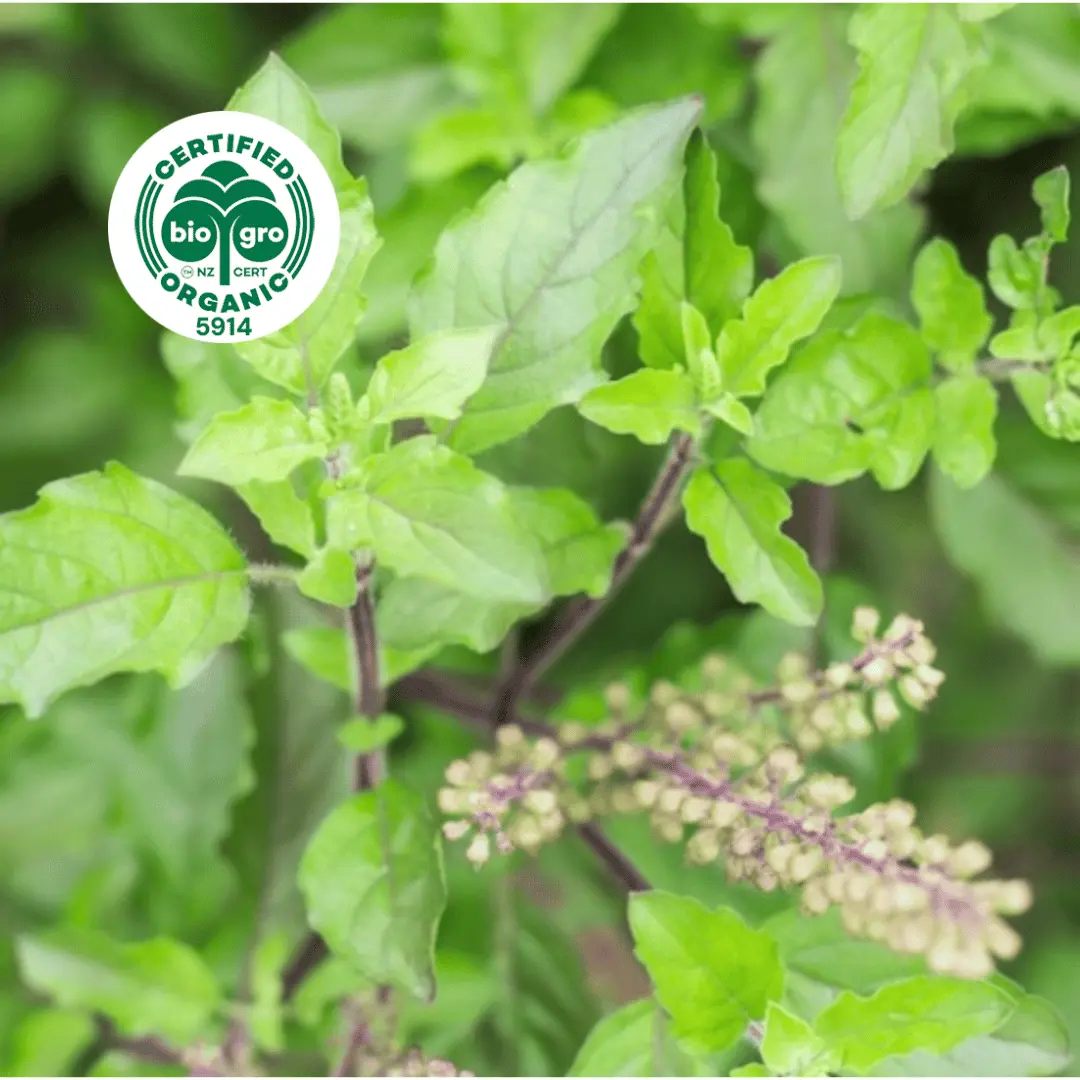
Thyme essential oil is steam distilled from Thymus vulgaris, a low-growing perennial herb widely known as culinary or “garden” thyme. The plant typically reaches around 30cm in height and features small green-grey, elliptical leaves and tubular flowers, most commonly mauve in colour. The resulting essential oil has a warm, sweet, herbaceous aroma that is both familiar and distinctive.
Batch variation notice
Please note that this current batch is darker in colour and more pungent in aroma than previous batches. As a natural product, essential oils can vary significantly depending on harvest timing, climate, and growing conditions. In the case of thyme oil, higher levels of naturally occurring components such as thymol can result in a stronger, sharper scent and deeper colour. These variations are a normal characteristic of naturally variable essential oils and reflect the natural composition of each batch.
Background
The name thyme is thought to originate from the Greek thymon, meaning “to fumigate”, reflecting its long history of use in aromatic and cleansing practices. It has also been associated with the Greek thumon, meaning courage. Historically, thyme was linked with bravery and strength, from Roman soldiers bathing with the herb to medieval traditions of gifting thyme sprigs to knights before battle.
Common Uses
-
Aromatherapy: Commonly used for its strong, herbaceous aroma in diffusers and blends.
-
Home fragrance: Often included in natural air-freshening and cleaning blends for a fresh, clean scent.
-
DIY cleaning: A popular addition to homemade surface sprays and cleaning formulations.
-
Soapmaking: Used to add a robust herbal note to cold and hot process soaps.
-
Massage and body oils: Suitable for use when properly diluted in a carrier oil.
-
Potpourri and sachets: Adds a warm herbal note to dry blends for cupboards and drawers.
Common Name: Thyme Essential Oil
INCI: Thymus vulgaris
Certification: Certified organic, BioGro
Appearance: Light amber to dark amber liquid
Odour: Herbaceous, and characteristically strong
Plant Part Used: Herb
Extraction Method: Steam distillation
Purity: 100%
Origin: India
Solubility: Oil and alcohol
Usage Rate: Skincare: 0.1 - 1%, Soapmaking: 1 - 3%
Note: Middle
Blends Well With: Bergamot, clary sage, cypress, eucalyptus (all), geranium, grapefruit, lavender, lemon, marjoram, peru balsam, pine, rosemary, teatree
Vegan: Yes
Palm Oil: No
Animal Tested: No
Safety
A potent essential oil. Use with care, particularly on sensitive skin. Avoid use during pregnancy. Do not take internally. Always dilute before skin application and carry out a patch test prior to use.
Product Information
Product Information
Shipping & Returns
Shipping & Returns
Thyme essential oil, certified organic
Thyme essential oil, certified organic
Thyme essential oil, certified organic
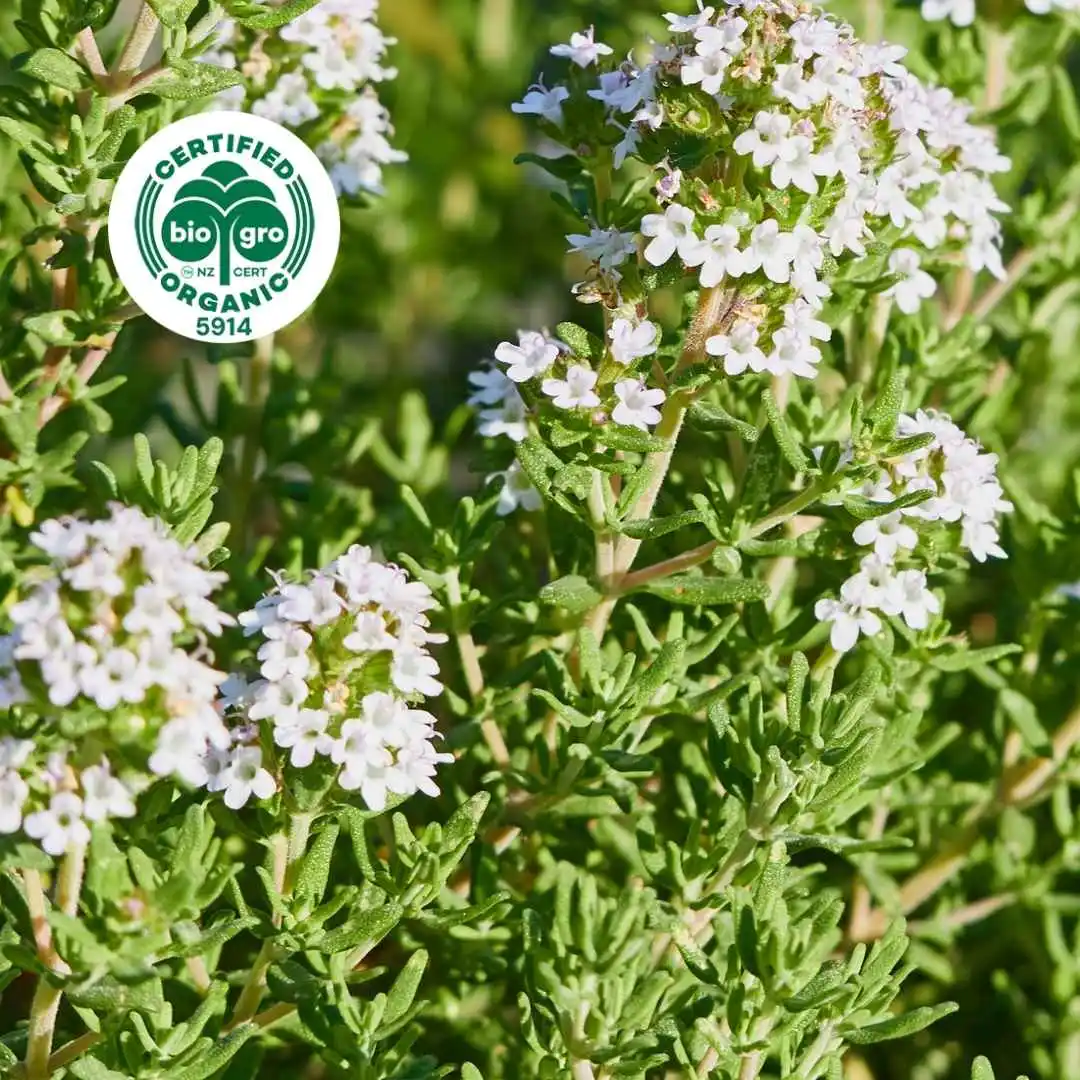
Thyme essential oil is steam distilled from Thymus vulgaris, a low-growing perennial herb widely known as culinary or “garden” thyme. The plant typically reaches around 30cm in height and features small green-grey, elliptical leaves and tubular flowers, most commonly mauve in colour. The resulting essential oil has a warm, sweet, herbaceous aroma that is both familiar and distinctive.
Batch variation notice
Please note that this current batch is darker in colour and more pungent in aroma than previous batches. As a natural product, essential oils can vary significantly depending on harvest timing, climate, and growing conditions. In the case of thyme oil, higher levels of naturally occurring components such as thymol can result in a stronger, sharper scent and deeper colour. These variations are a normal characteristic of naturally variable essential oils and reflect the natural composition of each batch.
Background
The name thyme is thought to originate from the Greek thymon, meaning “to fumigate”, reflecting its long history of use in aromatic and cleansing practices. It has also been associated with the Greek thumon, meaning courage. Historically, thyme was linked with bravery and strength, from Roman soldiers bathing with the herb to medieval traditions of gifting thyme sprigs to knights before battle.
Common Uses
-
Aromatherapy: Commonly used for its strong, herbaceous aroma in diffusers and blends.
-
Home fragrance: Often included in natural air-freshening and cleaning blends for a fresh, clean scent.
-
DIY cleaning: A popular addition to homemade surface sprays and cleaning formulations.
-
Soapmaking: Used to add a robust herbal note to cold and hot process soaps.
-
Massage and body oils: Suitable for use when properly diluted in a carrier oil.
-
Potpourri and sachets: Adds a warm herbal note to dry blends for cupboards and drawers.
Common Name: Thyme Essential Oil
INCI: Thymus vulgaris
Certification: Certified organic, BioGro
Appearance: Light amber to dark amber liquid
Odour: Herbaceous, and characteristically strong
Plant Part Used: Herb
Extraction Method: Steam distillation
Purity: 100%
Origin: India
Solubility: Oil and alcohol
Usage Rate: Skincare: 0.1 - 1%, Soapmaking: 1 - 3%
Note: Middle
Blends Well With: Bergamot, clary sage, cypress, eucalyptus (all), geranium, grapefruit, lavender, lemon, marjoram, peru balsam, pine, rosemary, teatree
Vegan: Yes
Palm Oil: No
Animal Tested: No
Safety
A potent essential oil. Use with care, particularly on sensitive skin. Avoid use during pregnancy. Do not take internally. Always dilute before skin application and carry out a patch test prior to use.
Original: $4.61
-65%$4.61
$1.61Product Information
Product Information
Shipping & Returns
Shipping & Returns
Description
Thyme essential oil, certified organic
Thyme essential oil is steam distilled from Thymus vulgaris, a low-growing perennial herb widely known as culinary or “garden” thyme. The plant typically reaches around 30cm in height and features small green-grey, elliptical leaves and tubular flowers, most commonly mauve in colour. The resulting essential oil has a warm, sweet, herbaceous aroma that is both familiar and distinctive.
Batch variation notice
Please note that this current batch is darker in colour and more pungent in aroma than previous batches. As a natural product, essential oils can vary significantly depending on harvest timing, climate, and growing conditions. In the case of thyme oil, higher levels of naturally occurring components such as thymol can result in a stronger, sharper scent and deeper colour. These variations are a normal characteristic of naturally variable essential oils and reflect the natural composition of each batch.
Background
The name thyme is thought to originate from the Greek thymon, meaning “to fumigate”, reflecting its long history of use in aromatic and cleansing practices. It has also been associated with the Greek thumon, meaning courage. Historically, thyme was linked with bravery and strength, from Roman soldiers bathing with the herb to medieval traditions of gifting thyme sprigs to knights before battle.
Common Uses
-
Aromatherapy: Commonly used for its strong, herbaceous aroma in diffusers and blends.
-
Home fragrance: Often included in natural air-freshening and cleaning blends for a fresh, clean scent.
-
DIY cleaning: A popular addition to homemade surface sprays and cleaning formulations.
-
Soapmaking: Used to add a robust herbal note to cold and hot process soaps.
-
Massage and body oils: Suitable for use when properly diluted in a carrier oil.
-
Potpourri and sachets: Adds a warm herbal note to dry blends for cupboards and drawers.
Common Name: Thyme Essential Oil
INCI: Thymus vulgaris
Certification: Certified organic, BioGro
Appearance: Light amber to dark amber liquid
Odour: Herbaceous, and characteristically strong
Plant Part Used: Herb
Extraction Method: Steam distillation
Purity: 100%
Origin: India
Solubility: Oil and alcohol
Usage Rate: Skincare: 0.1 - 1%, Soapmaking: 1 - 3%
Note: Middle
Blends Well With: Bergamot, clary sage, cypress, eucalyptus (all), geranium, grapefruit, lavender, lemon, marjoram, peru balsam, pine, rosemary, teatree
Vegan: Yes
Palm Oil: No
Animal Tested: No
Safety
A potent essential oil. Use with care, particularly on sensitive skin. Avoid use during pregnancy. Do not take internally. Always dilute before skin application and carry out a patch test prior to use.